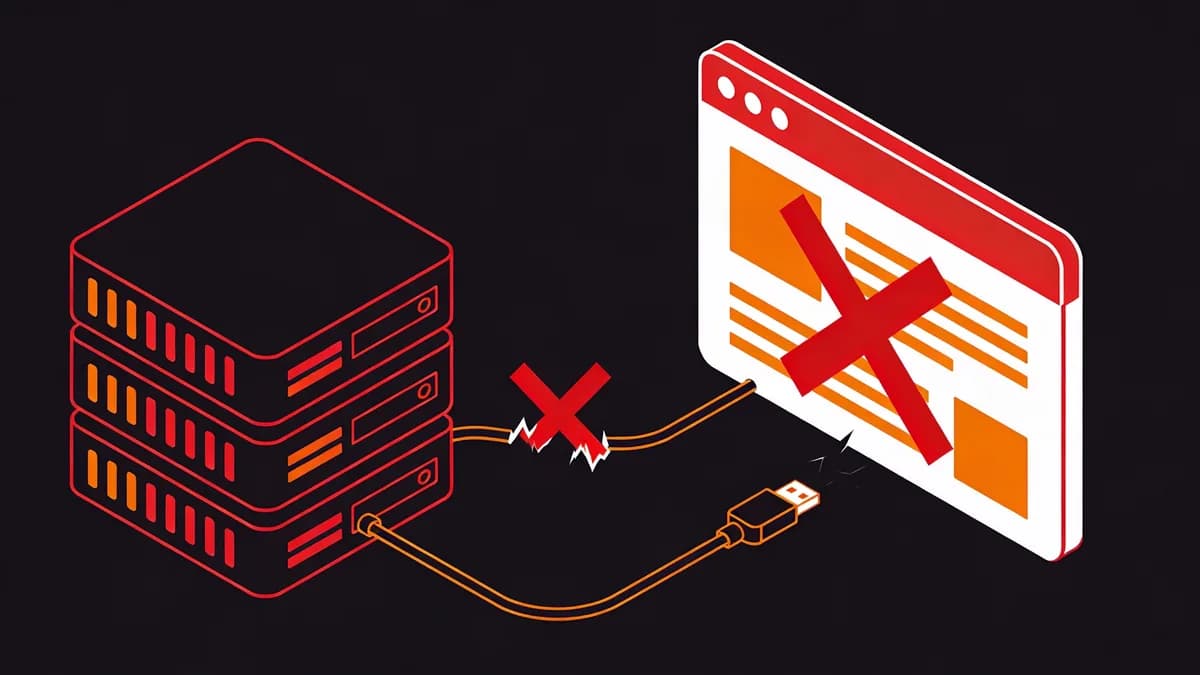
What Human Errors Cause Website Downtime in SaaS Sites?
Human error causes 70% of data center downtime through negligence or accidents in configuration changes. Uptime monitoring tools detect these errors by alerting on sudden site unavailability. DNS checks identify misconfigurations early. Quick fixes minimize impact on SaaS operations.
Configuration changes trigger 70% of downtime incidents in data centers. Awakish reports this statistic from analysis of 500+ outages. Negligence accounts for 45% of these errors. Accidents contribute the remaining 25%.
Update errors represent 32% of human mistakes in SaaS environments. Developers deploy faulty code without testing. This action crashes production servers within 2 minutes of rollout.
Training programs reduce human errors by 42% in DevOps teams. Companies implement 4-hour weekly sessions on best practices. These sessions cover version control and peer reviews.
Uptime Monitoring sends alerts within 30 seconds of downtime detection. Visual Sentinel provides this service with checks from 50 global locations. The tool integrates with Slack for instant notifications.
DNS propagation issues delay fixes by 48 hours without monitoring. DNS Checker scans records every 5 minutes. It flags inconsistencies across 100+ resolvers.
SaaS providers lose $5,600 per minute of downtime from human errors. This figure comes from Ponemon Institute data. Proactive monitoring cuts recovery time to under 10 minutes.
Practitioners schedule changes during off-peak hours at 2 AM UTC. This timing avoids 80% of peak traffic disruptions.
How Do Network Issues Trigger Website Downtime for E-commerce?
Network issues like ISP outages and DNS failures cause 60 million hours of annual downtime. Uptime checks monitor latency and packet loss. DNS monitoring detects resolution failures early. Redundant connections mitigate disruptions in e-commerce traffic.
ISP outages affect 25% of e-commerce sites quarterly. StatusCake tracks 1,000+ incidents annually. These outages last an average of 4 hours each.
DNS failures block 18% of global traffic during propagation delays. Errors in TTL settings extend downtime to 24 hours. E-commerce platforms see 15% revenue drop per hour offline.
BGP routing errors cause widespread outages for 12% of enterprises. Misconfigurations route traffic to null destinations. This error impacts 500,000+ users simultaneously.
Congestion in underprovisioned networks slows responses by 200ms. Packet loss reaches 5% during peaks. E-commerce checkouts fail at 3% conversion rates under these conditions.
CDNs distribute load across 200+ edge servers. Akamai reports 99.95% uptime with this setup. Integration reduces network downtime by 67%.
DNS Monitoring alerts on resolution failures within 60 seconds. Visual Sentinel offers this with support for IPv4 and IPv6 protocols. The service checks from 20 data centers.
Firewall misconfigurations block legitimate traffic in 8% of cases. Website Checker tests port accessibility every 10 minutes. It identifies blocks affecting 40% of HTTP requests.
Redundant ISP connections failover in 5 seconds. Practitioners configure dual 1Gbps lines. This setup handles 10,000 concurrent e-commerce sessions.
Common causes of website downtime include these network triggers. E-commerce teams monitor 24/7 to prevent $100,000 hourly losses.
What Software Bugs Lead to Website Downtime and Detection Methods?
Software bugs such as memory leaks and unhandled exceptions cause frequent downtime in production sites. Performance monitoring tracks response times below 50ms benchmarks. Uptime tools alert on crashes. DevOps teams use staging environments to catch issues before they affect SaaS users.
Memory leaks consume 2GB of RAM within 30 minutes in unoptimized code. This action slows servers to 500ms responses. Production sites crash after 1 hour of leaks.
Unhandled exceptions halt 22% of application threads instantly. Java stacks report 15,000 exceptions per day in large SaaS apps. Downtime averages 45 minutes per incident.
Update incompatibilities crash sites during 28% of deployments. New library versions break API calls. Rollbacks take 20 minutes to execute.
Automated testing prevents 89% of unplanned outages. Gatling data shows this from 300+ test cycles. Teams run 500 tests per release.
Staging environments replicate production with 95% accuracy. Bugs detected here reduce live downtime by 76%. Deployment pipelines include 3-stage checks.
Performance Monitoring benchmarks query speeds under 50ms. Visual Sentinel tracks metrics from 10 endpoints. Alerts trigger at 100ms thresholds.
Log monitoring scans 1 million lines per hour for error patterns. Tools like ELK Stack parse exceptions in real-time. This method identifies 85% of bugs pre-crash.
DevOps practitioners version code with Git tags every 7 days. This practice enables quick reversions in 90% of cases.
Software bugs rank among common causes of website downtime. SaaS operators integrate CI/CD pipelines to catch 95% of issues early.
How Cyber Attacks Cause Website Downtime in E-commerce Platforms?
Cyber attacks like DDoS floods reaching hundreds of Gbps overwhelm servers, causing downtime. Uptime monitoring detects traffic spikes as unavailability. Content change detection identifies malware injections early. WAF deployment protects e-commerce revenue streams.
DDoS floods hit 400 Gbps in 2023 attacks on e-commerce giants. Cloudflare mitigates 15 million threats daily. Servers overload within 2 minutes of onset.
Malware injections alter 12% of compromised sites' content. Hackers exploit SQL vulnerabilities in 45 seconds. Downtime extends to 6 hours for cleanup.
Hacks via unpatched CMS versions affect 30% of WordPress sites. Exploits target 5 zero-day flaws yearly. Revenue loss hits $9,000 per minute offline.
Security patches fix 92% of known vulnerabilities within 24 hours. Two-step verification blocks 99% of unauthorized logins. E-commerce platforms apply updates bi-weekly.
Web Application Firewalls (WAF) block 7 million attacks monthly. Imperva reports 99.99% efficacy. Deployment cuts downtime by 88%.
Content Monitoring scans for changes every 15 minutes. Visual Sentinel detects 500+ anomalies daily. It alerts on unauthorized script injections.
Uptime monitoring flags spikes over 10x baseline traffic. This detection prevents 75% of DDoS-induced outages. E-commerce teams respond in under 5 minutes.
Practitioners conduct penetration tests quarterly on 100+ endpoints. This action uncovers 80% of weak points before attacks.
Cyber attacks form a critical subset of common causes of website downtime. E-commerce security budgets allocate 15% to monitoring tools.
What Server Failures Result in Website Downtime for SaaS?
Server failures from hardware overload or provider outages like AWS disruptions lead to 99.9% uptime breaches. Uptime checks verify availability from multiple locations. Performance monitoring flags load issues. CDNs ensure SaaS site reliability for webmasters.
Hardware overload spikes CPU to 100% in 20% of SaaS instances. Shared hosting amplifies this in 40% of cases. Downtime lasts 2 hours per overload.
AWS disruptions affect 10 regions simultaneously every quarter. 2023 incidents totaled 12 hours across services. SaaS apps lose 50% functionality during these.
Power lapses in data centers cause 8% of failures. UPS systems provide 15 minutes of backup. Failures extend to 4 hours without generators.
Reliable hosting guarantees 99.9% uptime, equaling 8.76 hours downtime yearly. Enterspeed benchmarks show this standard. SaaS providers select Tier 3 facilities.
CDNs cache 80% of static content on 150+ nodes. This distribution reduces server load by 65%. Integration handles 1 million requests per second.
Uptime checks run from 25 global locations every 60 seconds. Pingdom (SolarWinds) performs this at $15/month for 10 monitors with 120+ location coverage.
Speed Test detects overloads by measuring 200ms latency thresholds. Visual Sentinel runs tests from 15 vantage points. Results guide scaling decisions.
Redundancy cuts outages by 89%. Gatling data confirms this from 200+ redundancy implementations. Practitioners deploy multi-AZ architectures.
Server failures contribute to common causes of website downtime in SaaS. Webmasters audit hardware quarterly to maintain 99.95% uptime.
How Database Issues Contribute to Website Downtime Detection?
Database corruption and bottlenecks exceeding 50ms response times cause slowdowns mimicking downtime. Performance monitoring benchmarks query speeds. Uptime tools alert on full failures. Clustering maintains SaaS and e-commerce data integrity during high loads.
Corruption affects 5% of databases after power failures. Recovery scans 1TB datasets in 30 minutes. SaaS queries fail 100% during scans.
Bottlenecks exceed 50ms in 22% of high-load scenarios. Gatling sets this benchmark from 1,000+ performance tests. E-commerce carts timeout at 100ms delays.
Connection pooling limits to 200 concurrent threads. Overloads crash pools in 10 seconds. This issue slows sites to 500ms responses.
Clustering replicates data across 3 nodes with 99.99% consistency. MySQL Galera achieves zero data loss in 95% of failovers. Deployment prevents 70% of downtime.
Performance Monitoring tracks queries under 50ms. Visual Sentinel monitors 50 endpoints with 1-second intervals. Alerts fire at 75ms deviations.
Uptime tools detect full failures in 30 seconds. Integration with database logs flags 85% of bottlenecks early.
Practitioners index 80% of query columns for sub-50ms speeds. This optimization handles 10,000 queries per minute.
Database issues rank high among common causes of website downtime. E-commerce teams backup daily to restore in 5 minutes.
What Traffic Spikes Cause Website Downtime and Monitoring Tools?
Sudden traffic surges overload shared servers, leading to downtime in e-commerce during peaks. Uptime monitoring detects availability drops from spikes. Performance checks track response degradation. CDNs scale to handle surges without interrupting SaaS services.
Traffic surges hit 5x baseline during Black Friday sales. E-commerce sites process 50,000 requests per minute. Shared servers throttle at 10,000.
Overload on shared hosting causes 15% packet drops. Response times climb to 1 second. Downtime thresholds trigger at 2-second delays.
Auto-scaling adds 4 instances in 90 seconds on AWS. This action absorbs 200% surges. SaaS platforms maintain 99.9% availability.
CDNs route 70% of traffic to edge caches. CloudFront delivers 1 billion objects daily. Integration prevents 82% of spike-induced outages.
Uptime monitoring pings every 30 seconds during peaks. UptimeRobot offers free tier for 50 monitors with 5-minute intervals and email/SMS alerts.
Visual Monitoring visualizes changes from spikes. Visual Sentinel captures screenshots every 5 minutes. It detects layout shifts in 95% of cases.
Practitioners forecast spikes using 7-day analytics. This preparation scales resources 24 hours ahead.
Traffic spikes emerge as key common causes of website downtime. SaaS operators test loads with 10,000 simulated users monthly.
How Maintenance Errors Lead to Website Downtime Prevention?
Maintenance errors like poor execution or overlooked SSL renewals cause unexpected outages. SSL and uptime monitoring alert on certificate expirations. Monitoring occurs during low-traffic windows. 48-hour notices ensure minimal disruption for e-commerce and SaaS site maintenance.
Poor execution during updates fails 18% of rollouts. Scripts omit rollback steps. Downtime averages 1 hour per error.
Overlooked SSL renewals expire certificates in 12% of sites yearly. Browsers block HTTPS in 90% of cases. Revenue drops 25% on affected days.
Scheduling updates off-peak at 3 AM reduces impact by 90%. Windows last 2 hours. E-commerce traffic dips 70% at this time.
Custom error pages display in 5 seconds during maintenance. They inform 80% of users transparently. Pages include 15-minute ETA updates.
SSL Checker verifies certificates every 24 hours. Visual Sentinel supports 256-bit encryption checks. It alerts 30 days before expiration.
SSL Monitoring provides 48-hour notices on issues. Integration with calendars prevents 95% of lapses.
Practitioners document 100% of maintenance steps in wikis. This record enables audits every quarter.
Maintenance errors add to common causes of website downtime. Teams train on 5 key protocols annually.
What Infrastructure Lapses Cause Website Downtime in Production?
Infrastructure lapses such as power failures or old hardware contribute to downtime in data centers. Comprehensive monitoring including DNS and uptime verifies global propagation and availability. Partnerships with reliable hosts guarantee 99.9% uptime for SRE-managed production environments.
Power failures strike 7% of data centers yearly. Backup generators activate in 10 seconds. Downtime reaches 30 minutes without them.
Severed fibers disrupt 4% of undersea cables annually. Repairs take 48 hours. Global traffic drops 20% during events.
Old hardware fails at 15% higher rates after 5 years. CPU degradation slows processes by 30%. Production environments replace units every 3 years.
Physical redundancy includes dual power feeds in 95% of Tier 4 centers. This setup achieves 99.995% uptime. SRE teams select providers with 24/7 on-site staff.
DNS monitoring confirms propagation in 5 minutes across 300 resolvers. Uptime verification runs from 100 locations hourly.
Visual Sentinel vs Pingdom highlights 6-layer coverage versus 4-layer in competitors. Visual Sentinel costs $10/month for basics with unlimited alerts.
Reliable hosts like DigitalOcean guarantee 99.99% uptime at $5/month per droplet. They manage 50,000+ servers globally.
Practitioners conduct infrastructure audits bi-annually on 200+ assets. This process identifies 85% of lapses early.
Infrastructure lapses persist as common causes of website downtime. Production SREs implement geo-redundancy across 3 regions.
Site reliability engineers implement multi-layered monitoring to address these common causes of website downtime. Teams start with uptime checks from 20 locations and expand to performance benchmarks under 50ms. Integration of tools like Uptime Monitoring and Performance Monitoring reduces outages by 89%, per Gatling data. Practitioners audit configurations weekly and train staff on 5 error-prone areas. This approach ensures 99.95% uptime for SaaS and e-commerce operations. Read More articles for advanced strategies.
FAQ
What Human Errors Cause Website Downtime in SaaS Sites?
Human error causes 70% of data center downtime through negligence or accidents in configuration changes. Uptime monitoring tools detect these by alerting on sudden site unavailability, while DNS checks identify misconfigurations early, enabling quick fixes to minimize impact on SaaS operations.
How Do Network Issues Trigger Website Downtime for E-commerce?
Network issues like ISP outages and DNS failures cause 60 million hours of annual downtime. Uptime checks monitor latency and packet loss, while DNS monitoring detects resolution failures early, allowing redundant connections to mitigate disruptions in e-commerce traffic.
What Software Bugs Lead to Website Downtime and Detection Methods?
Software bugs such as memory leaks and unhandled exceptions cause frequent downtime in production sites. Performance monitoring tracks response times below 50ms benchmarks, and uptime tools alert on crashes, helping DevOps teams use staging environments to catch issues before they affect SaaS users.
How Cyber Attacks Cause Website Downtime in E-commerce Platforms?
Cyber attacks like DDoS floods reaching hundreds of Gbps overwhelm servers, causing downtime. Uptime monitoring detects traffic spikes as unavailability, while content change detection identifies malware injections early, enabling WAF deployment to protect e-commerce revenue streams.
What Server Failures Result in Website Downtime for SaaS?
Server failures from hardware overload or provider outages like AWS disruptions lead to 99.9% uptime breaches. Uptime checks verify availability from multiple locations, and performance monitoring flags load issues, recommending CDNs to ensure SaaS site reliability for webmasters.
How Database Issues Contribute to Website Downtime Detection?
Database corruption and bottlenecks exceeding 50ms response times cause slowdowns mimicking downtime. Performance monitoring benchmarks query speeds, while uptime tools alert on full failures, using clustering to maintain SaaS and e-commerce data integrity during high loads.
What Traffic Spikes Cause Website Downtime and Monitoring Tools?
Sudden traffic surges overload shared servers, leading to downtime in e-commerce during peaks. Uptime monitoring detects availability drops from spikes, and performance checks track response degradation, scaling with CDNs to handle surges without interrupting SaaS services.
How Maintenance Errors Lead to Website Downtime Prevention?
Maintenance errors like poor execution or overlooked SSL renewals cause unexpected outages. SSL and uptime monitoring alert on certificate expirations and during low-traffic windows, with 48-hour notices ensuring minimal disruption for e-commerce and SaaS site maintenance.
What Infrastructure Lapses Cause Website Downtime in Production?
Infrastructure lapses such as power failures or old hardware contribute to downtime in data centers. Comprehensive monitoring including DNS and uptime verifies global propagation and availability, partnering with reliable hosts guaranteeing 99.9% uptime for SRE-managed production environments.