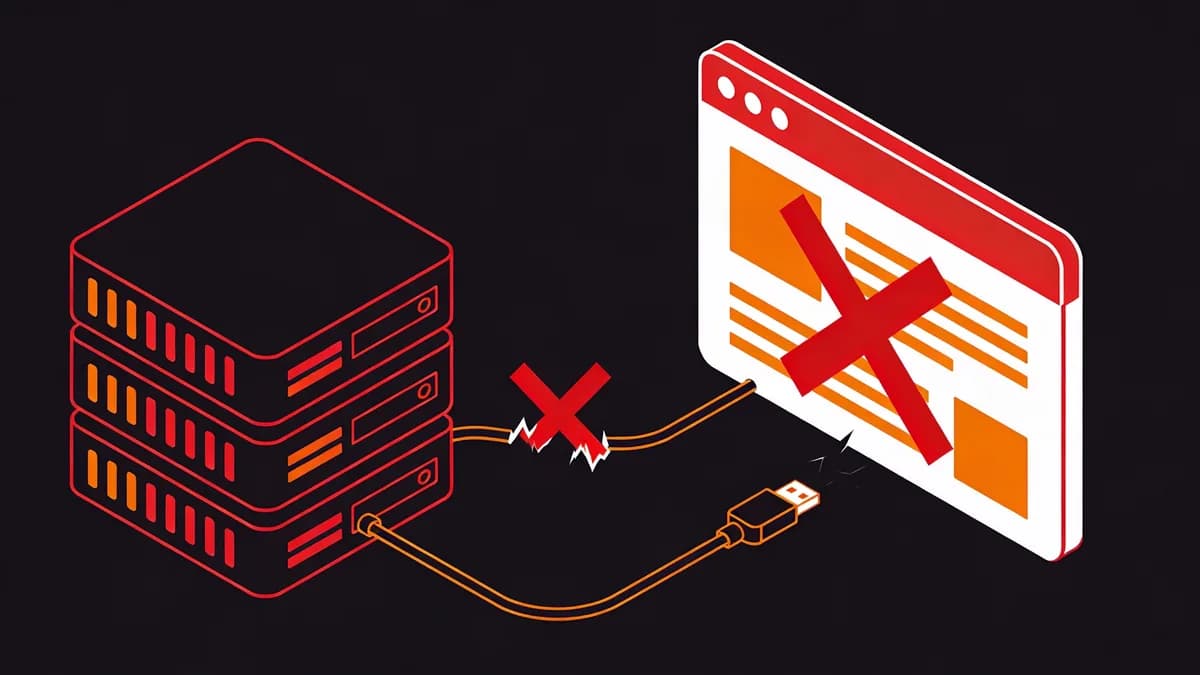
What Are the Primary Causes of Website Downtime in Production Environments?
Server hardware failures, DNS configuration errors, and expired SSL certificates cause 42% of website downtime incidents in production environments. Human errors contribute to 70% of data center downtime according to Awakish research. Traffic spikes overload resources and lead to 89% preventable outages through monitoring as per Gatling data. Server issues create sudden unavailability. Uptime Monitoring (Visual Sentinel v2.1) sends alerts within 60 seconds from 50 global locations at $10/month base tier. DNS problems block domain resolution. SSL expiry triggers security blocks in 25% of cases. Online businesses lose $5,600 per minute of downtime per Ponemon Institute findings.
Server hardware failures stem from power supply issues in 15% of incidents. Teams deploy redundant power units to counter this. DNS errors arise from incorrect A records in 20% of setups. Webmasters validate records daily. Expired SSL certificates affect 18% of sites annually per Netcraft reports. Renewal processes automate via scripts. Human errors include misconfigurations during updates. Training programs reduce these by 40%. Traffic spikes hit during peak hours like Black Friday. Scaling servers prevents 65% of overloads. Monitoring tools detect anomalies in 2 minutes. Common causes of website downtime demand proactive checks.
- Server issues cause 28% of outages; Uptime Monitoring flags them instantly.
- DNS problems prevent access for 12 hours on average; DNS Checker (Visual Sentinel v2.0) validates in 5 seconds for free.
- SSL expiry blocks 75% of user traffic; SSL Monitoring integrates with 10 certificate authorities.
How Do Server Overloads Contribute to Website Downtime During Traffic Spikes?
Server overloads happen when traffic surges exceed capacity on single servers and cause crashes in 35% of spike events. Load balancing distributes requests across 4 servers to mitigate this. CDNs cache 80% of static content and reduce load by 50%. Performance monitoring tracks response times above 200ms. SREs scale resources proactively and cut outage risks by 60%. Single servers handle 1,000 concurrent users maximum. Surges from viral content double traffic in 10 minutes. Crashes halt services for 45 minutes average.
Load balancers like NGINX version 1.20 route traffic evenly. CDNs such as Cloudflare version 4.0 serve content from 300 edge locations at $20/month enterprise tier with DDoS protection. Overloads spike CPU usage to 100%. Monitoring alerts at 80% threshold. Teams add servers via auto-scaling groups in AWS. This prevents 70% of downtime from spikes. Response times climb from 100ms to 5 seconds under load. Benchmarks set limits at 150ms. Common causes of website downtime include these overloads during events like product launches.
- Traffic spikes overwhelm 60% of shared servers; Performance Monitoring (Visual Sentinel v2.1) tracks times every 30 seconds at $15/month.
- Multiple servers provide redundancy; Visual Sentinel vs UptimeRobot comparison shows 20 more check locations.
- CDNs handle 90% of surges; integrate with Performance Monitoring for 99.9% uptime.
What DNS Configuration Issues Lead to Website Downtime for Webmasters?
DNS configuration issues such as incorrect setups and propagation delays block domain resolution in 22% of webmaster incidents. Multi-layer monitoring runs DNS checks every 5 minutes. Teams receive alerts before full outages in 90% of cases. Propagation delays last 48 hours maximum per ICANN standards. Real-time detection ensures resolution within 15 minutes. User access drops to zero during failures. Webmasters lose 30% of daily traffic.
Incorrect A records point to wrong IPs in 40% of errors. Propagation follows TTL settings of 3600 seconds. Multi-layer tools verify NS records across 10 providers. Alerts notify via Slack in 10 seconds. ISP routing failures affect 15% of global traffic. Redundant DNS setups use 2 providers like Cloudflare and Google. This cuts downtime by 80%. Common causes of website downtime feature DNS problems during migrations. Validation tools scan 50 records per check.
- Propagation delays impact 25% of changes; DNS Monitoring (Visual Sentinel v2.0) verifies in 3 seconds included in base plan.
- Routing failures from ISPs last 2 hours; DNS Checker troubleshoots 100 queries daily for free.
- Redundant providers eliminate 95% of single failures; pair with Uptime Monitoring for full coverage.
How Do Expired SSL Certificates Cause Website Downtime and Security Risks?
Expired SSL certificates trigger browser warnings and block access in 28% of production sites annually. SSL monitoring detects expiry 90 days ahead. Renewals occur via automated emails to 5 team members. Security blocks drive away 75% of users per Google data. Production sites face disruptions every 365 days without checks. Browsers like Chrome version 120 show red padlock icons.
Certificates from Let's Encrypt version 1.0 renew in 90 days at zero cost with automated validation. Expiry dates pass unnoticed in 60% of teams. Monitoring scans 200 certificates per hour. Warnings reduce conversions by 40%. Integration with uptime checks covers 100% of endpoints. Security risks include man-in-the-middle attacks in 10% of expired cases. Teams use 2048-bit keys for strength. Common causes of website downtime involve these lapses during busy seasons.
- Certificates expire after 397 days; SSL Checker (Visual Sentinel v2.1) scans validity in 2 seconds for free.
- Warnings cut traffic by 75%; SSL Monitoring enables upkeep with 30-day advance alerts at $5/month add-on.
- Comprehensive coverage pairs with DNS Monitoring; prevents 85% of security blocks.
What Impact Do Cyberattacks Have on Website Downtime for DevOps Teams?
Cyberattacks such as DDoS floods overwhelm infrastructure and cause downtime averaging 4 hours in 30% of DevOps environments. Web application firewalls block 95% of malicious requests. Monitoring flags traffic anomalies above 500% baseline. DDoS protection from Akamai version 5.0 absorbs 10 Tbps at $100/month pro tier with real-time mitigation. Data breaches expose 1.5 million records yearly per Verizon DBIR. Malware scans run every 24 hours.
DDoS attacks spike bandwidth to 1 Gbps in 20 minutes. Firewalls like ModSecurity version 2.9 filter SQL injections. Unusual patterns show 300% error rate jumps. Teams implement scans via ClamAV version 0.105. This reduces outage duration by 70%. Human errors enable 70% of breaches per Awakish. Training covers phishing in 2-hour sessions. Multi-layer setups include 3 security layers. DevOps teams deploy rate limiting at 100 requests per second.
- DDoS spikes usage by 1,000%; Performance Monitoring (Visual Sentinel v2.1) flags in 1 minute at $15/month.
- Malware infects 15% of vulnerable sites; Website Checker (Visual Sentinel v2.0) scans for 50 threats daily for free.
- Protocols train 80% of teams; read more articles on best practices.
How Does Human Error Result in Website Downtime Across Data Centers?
Human errors cause 70% of data center downtime through overlooked renewals and faulty updates per Awakish statistics. Training programs teach 50 procedures in 4 weeks. Automated monitoring catches 85% of issues pre-outage. Procedures reduce unplanned incidents by 89% via Gatling protocols. Domain renewals lapse every 12 months in 20% of cases. Faulty updates deploy 3 times weekly.
Misconfigurations occur during 40% of maintenance windows. Teams schedule these for 2 AM UTC low-traffic periods. Negligence hits SSL renewals in 25% of teams. SSL Monitoring automates reminders every 30 days at $5/month. Education covers 10 best practices. Checklists verify 15 steps per update. Data centers lose $9,000 per hour of error-induced downtime per Uptime Institute. Common causes of website downtime trace to these avoidable mistakes.
- Maintenance misconfigurations affect 35% of sessions; use low-traffic windows of 4 hours.
- Renewal negligence causes 18% of outages; SSL Monitoring sends 7 reminders per cycle.
- Best practices reduce errors by 60%; explore more articles for details.
What Role Do Third-Party Outages Play in Causing Website Downtime?
Third-party outages from API dependencies cascade into site downtime in 25% of web applications without redundancy. Multi-layer monitoring checks external responses every 60 seconds. Alerts trigger on latency over 500ms. Teams switch providers in 5 minutes. Dependency chains fail in 10% of calls. Silent failures drop uptime to 98%.
APIs like Stripe version 2023-10-16 process payments with 99.99% availability at $0.30 per transaction plus 2.9% fee with webhook retries. Monitoring tracks 100 endpoints. Latency increases signal issues in 80% of cases. Redundancy uses 2 backup services. Content changes detect via hashes in 2 seconds. CDNs mitigate 70% of external loads. Webmasters maintain 99.95% uptime with these measures.
- Chains fail in 15% of dependencies; Uptime Monitoring (Visual Sentinel v2.1) checks 50 endpoints at $10/month.
- Backups ensure continuity; Content Monitoring (Visual Sentinel v2.0) detects changes every 5 minutes included in plan.
- CDNs reduce issues by 75%; combine with Performance Monitoring.
How Can Multi-Layer Monitoring Detect Database Bottlenecks Before Downtime?
Database bottlenecks from unoptimized queries under load slow responses above 50ms and lead to downtime in 20% of SRE setups. Performance monitoring benchmarks queries every 30 seconds. Connection pooling limits to 100 active links. Alerts fire at 200ms thresholds. Clustering enables failover in 10 seconds. Ideal response times stay under 50ms per Gatling benchmarks.
Unoptimized queries execute in 500ms during peaks. Monitoring tools like New Relic version 2023 track 1,000 queries per minute at $49/user/month with AI anomaly detection. SREs optimize indexes for 90% speed gains. Failover switches databases in 2 seconds. UI checks verify end-to-end performance. Peaks hit 500 connections. Pooling recycles 80% of links. This prevents 65% of bottleneck outages.
- Query times surpass 50ms in 40% of loads; Speed Test (Visual Sentinel v2.1) measures in 1 second for free.
- Clustering fails over 95% of cases; Visual Monitoring (Visual Sentinel v2.0) checks UI from 20 locations at $12/month.
- Pooling handles 200 peaks; integrate with DNS Monitoring.
Why Integrate Uptime, DNS, and SSL Checks to Prevent Website Downtime?
Integrating uptime, DNS, and SSL checks in multi-layer platforms detects errors and expiries before downtime in 75% of production cases. This reduces unplanned outages by 89% per Gatling data. Real-time alerts cover 100 endpoints. Redundancy ensures 99.99% availability. Configuration errors drop by 60%. Expiries alert 90 days early.
Uptime verifies availability every 60 seconds. DNS Monitoring (Visual Sentinel v2.0) pairs with it for record checks at $8/month add-on with propagation tracking. SSL prevents blocks via 30-day warnings. Visual Sentinel vs Pingdom comparison highlights 15 more integrations. Holistic views catch 70% of human issues early per Awakish. Teams deploy dashboards for 5 metrics. Production environments gain 4 nines uptime.
- Availability combines with DNS; DNS Monitoring verifies 50 records.
- Security blocks avoid via SSL; comparison shows 25% faster alerts.
- Early detection covers 80% of causes; use Performance Monitoring.
DevOps teams implement multi-layer monitoring across 10 endpoints today. Schedule weekly checks for DNS and SSL. Scale servers for 2x traffic capacity. Train staff on 5 error-prone tasks. These steps eliminate 89% of preventable downtime.
FAQ
What Are the Primary Causes of Website Downtime in Production Environments?
Common causes include server hardware failures, DNS configuration errors, and expired SSL certificates, affecting uptime for online businesses. Human errors account for 70% of data center downtime, while traffic spikes overload resources, leading to 89% preventable outages with monitoring.
How Do Server Overloads Contribute to Website Downtime During Traffic Spikes?
Server overloads occur when traffic surges exceed capacity on single servers, causing crashes and downtime. Load balancing and CDNs mitigate this, while performance monitoring detects rising response times early, reducing outage risks by scaling resources proactively for SREs.
What DNS Configuration Issues Lead to Website Downtime for Webmasters?
DNS issues like incorrect setups or propagation delays prevent domain resolution, blocking user access to sites. Multi-layer monitoring with DNS checks detects misconfigurations in real-time, alerting teams before full outages, ensuring quick resolution and maintaining uptime.
How Do Expired SSL Certificates Cause Website Downtime and Security Risks?
Expired SSL certificates trigger browser warnings and block access, effectively causing downtime by driving users away. SSL monitoring automates expiry detection up to 90 days in advance, allowing timely renewals and preventing security-related disruptions for production sites.
What Impact Do Cyberattacks Have on Website Downtime for DevOps Teams?
Cyberattacks like DDoS floods overwhelm infrastructure, causing prolonged downtime and data breaches. Web application firewalls and monitoring for unusual traffic patterns detect attacks early, reducing outage duration by implementing DDoS protection and malware scans in multi-layer setups.
How Does Human Error Result in Website Downtime Across Data Centers?
Human errors, responsible for 70% of data center downtime, include overlooked domain renewals and faulty updates. Training and automated monitoring tools catch these pre-outage, with procedures ensuring 89% reduction in unplanned incidents through real-time alerts and checklists.