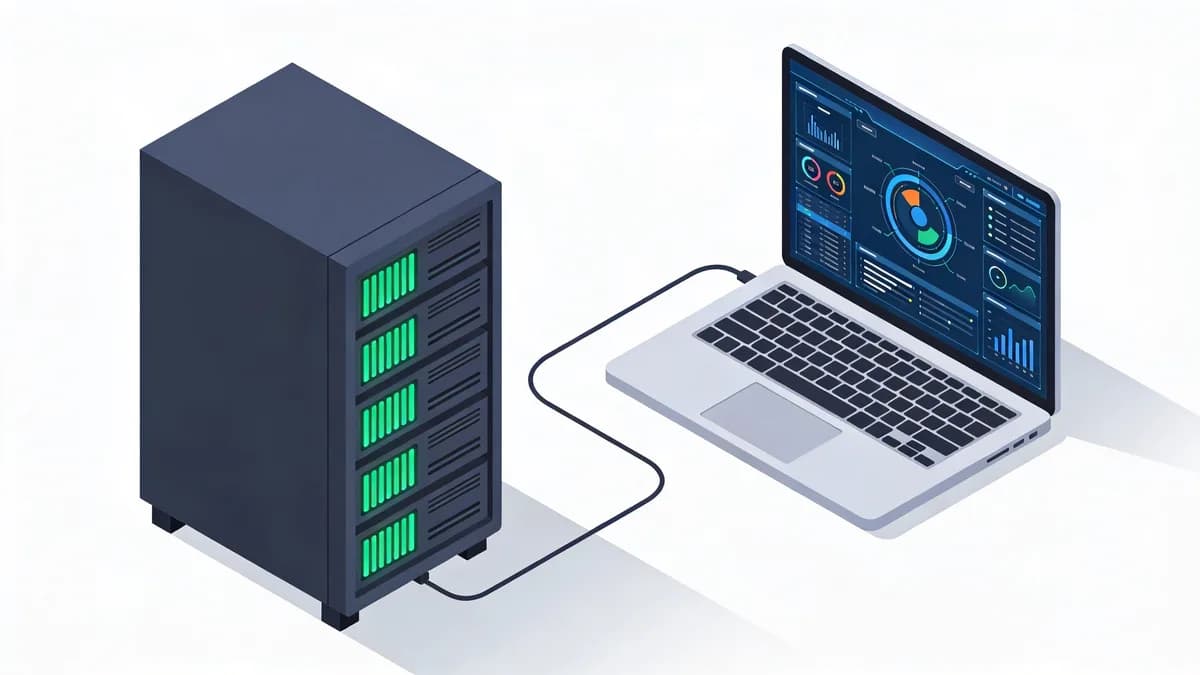
What Is Network Vulnerability Monitoring in Self-Hosted Setups?
Review network exposure, configuration and vulnerability advisories using tools suited to each task. Zabbix provides device observations and Security Onion provides intrusion and packet observations. These do not guarantee exploit detection or privacy.
Zabbix supports device observations and discovery with capacity for 100,000 devices. Security Onion provides packet capture and intrusion investigation.
Self-hosting does not eliminate data exposure.
Configure relevant Zabbix conditions and review Security Onion observations. DNS Checker provides separate manual record observations rather than scanning DNS vulnerabilities.
How Does Self-Hosting Affect Network Vulnerability Monitoring Control?
Self-hosting provides control over the deployment and data handling. Configure supported SNMP and WMI observations and assess operating responsibilities. Nagios XI starts at $1,995; self-hosting does not eliminate exposure or vendor dependencies.
Review access and collection security, including supported SNMP v3 settings and Windows observations.
NetFlow provides flow observations rather than full packet capture. Nagios XI includes 300 plugins at $1,995 for 100 hosts.
Review device and security evidence alongside separate Uptime Monitoring. Website availability does not prove exploitation or eliminate vendor dependencies.
What Tools Enable Network Vulnerability Monitoring in Homelabs?
Zabbix and CheckMK provide configured device observations and discovery, with capacity up to 100,000 devices.
Zabbix offers 100,000-device monitoring capacity with SNMP integration. CheckMK supports hybrid agentless observations. Neither device discovery nor a general alert alone proves exploitation of a specific CVE.
Choose suitable collection intervals and test discovery and notification coverage. Port 8080 is an example exposure to review, rather than proof of a vulnerability.
Open-source licensing does not eliminate operating costs. Website Checker provides a separate manual HTTP check rather than a vulnerability scan.
How Does Zabbix Handle Auto-Discovery for Vulnerability Detection?
Review configured discovery rules and supported observations.
Configure supported Zabbix templates and actions for the intended observations.
Performance Monitoring provides separate website observations. A speed drop does not prove exploitation.
What SNMP Features Support PRTG in Network Vulnerability Monitoring?
PRTG offers up to 100 free sensors with supported SNMP and NetFlow observations. Review device and traffic behavior without treating these observations as proof of a UniFi vulnerability.
PRTG uses sensor-based licensing with 100 free sensors and supports SNMP v3 observations.
Test discovery and supported conditions in the actual deployment. A CPU condition such as 80% is a chosen example rather than proof of a firmware flaw or zero-configuration setup.
SSL Monitoring provides website certificate validity and expiry observations rather than scanning certificate vulnerabilities. Test PRTG capacity for the deployed sensors.
How Does Security Onion Perform Packet Capture for Vulnerabilities?
Security Onion provides intrusion and packet observations for investigation. Review the supported rules and captured evidence; packet capture does not automatically identify every vulnerability or a particular UniFi issue.
Security Onion provides log analysis and intrusion detection.
Configure supported Security Onion components and intrusion rules for the relevant traffic.
Content Monitoring separately checks expected website text.
What Steps Detect UniFi Disclosures in Self-Hosted Networks?
Review the vendor advisory, then check the affected service and confirm the page still shows the expected text.
Step 1: Install Core Tools
Install supported Zabbix and Security Onion components using their documented requirements.
Verify the installation and intended collection paths.
Step 2: Configure Scans
Configure supported device observations and packet collection for the intended interfaces and network. A 5-minute interval is a configuration example, rather than a CVE-signature detection guarantee.
Configure supported flow exports and PRTG sensors. The 100 free sensors are a plan limit, rather than proof of discovery speed or vulnerability detection.
Step 3: Set Up Alerts
Configure relevant alert conditions and supported intrusion rules. Test email delivery instead of assuming a fixed event count or delay.
Configure supported escalation paths and test appropriate events.
Review the advisory and evidence for the actual firmware and service. More articles provides related guidance.
How Do Self-Hosted Tools Compare for Network Vulnerability Monitoring?
Compare device observations, discovery and operating requirements. Zabbix offers capacity for 100,000 devices; PRTG limits its free tier to 100 sensors. Neither establishes a universal ease-of-use or detection outcome.
Zabbix is open source with 100,000+ device support. PRTG offers 100 free sensors; Nagios XI starts at $1,995 and adds 300 enterprise plugins. Test setup for the actual assets.
CheckMK offers a free raw edition for 10,000 hosts, and Security Onion provides packet capture.
| Entity | Scale Capacity | Pricing Start | Key Protocol Support |
|---|---|---|---|
| Zabbix | 100,000+ devices | Free | SNMP, WMI |
| PRTG | 1,000+ sensors | 100 free | SNMP, NetFlow |
| Nagios XI | 500 hosts | $1,995 | SNMP, Plugins |
| CheckMK | 10,000 hosts | Free | Agentless SNMP |
| Security Onion | 10 Gbps traffic | Free | Full Packet Capture |
| Nagios Core | 100 hosts | Free | Basic SNMP |
Nagios XI requires $1,995 for enterprise features on 100 nodes. SolarWinds NPM starts at $1,700 for the SL250 tier, which covers 250 nodes, 250 interfaces and 250 volumes (750 elements in total). Visual Sentinel vs UptimeRobot provides a separate website-monitoring comparison, rather than security coverage.
Compare license and operating requirements. Zabbix integrates 50 APIs and PRTG maps 1,000 dependencies.
What Alerting Integrations Enhance Vulnerability Monitoring?
Configure supported email, Slack and API notifications in the chosen tools. Test routing and escalation; integrations do not guarantee delivery or response time.
CheckMK includes 20 notification methods and Nagios XI ($1,995) supports PagerDuty API hooks.
Netdata provides resource observations and supported alerts. Configure relevant thresholds and actions.
Visual Monitoring compares website screenshots against a baseline. A visible change does not prove exploitation.
Test supported notification paths and appropriate conditions.
Deploy notification routing for the intended devices and severity conditions.
Self-hosted alerting still requires delivery and failure testing.
Test integrations periodically with appropriate events and review the recorded history.
Actionable Steps for Implementing Network Vulnerability Monitoring
Deploy supported device observations and appropriate security tools for the intended network. Test discovery and packet collection before relying on coverage.
Review CVEs relevant to the installed stack and investigate dashboard observations.
Test supported responses safely and review relevant firmware updates. No fixed detection rate follows from combining tools.
Check your site while you read
Run a free check for regional reachability, response time, redirect handling, TLS evidence, and DNS resolution. No account is required.
Check a site freeCommon questions
What Is Network Vulnerability Monitoring in Self-Hosted Setups?
Review network exposure, configuration and relevant vulnerability advisories using tools suited to each task. Device discovery and intrusion observations do not alone establish that a particular CVE is present or exploited.
How Does Self-Hosting Affect Network Vulnerability Monitoring Control?
Self-hosting provides control over the deployment and its data handling. Configure supported SNMP or WMI observations and assess security responsibilities; self-hosting does not eliminate exposure or vendor dependencies. Nagios XI starts at $1,995.
What Tools Enable Network Vulnerability Monitoring in Homelabs?
Zabbix and CheckMK provide configured device observations and discovery, with advertised capacity up to 100,000 devices.
How Does Zabbix Handle Auto-Discovery for Vulnerability Detection?
Zabbix supports network discovery and agent observations. Configure the relevant checks and actions; discovering a device or open port does not alone establish a CVE or exploitation.
What SNMP Features Support PRTG in Network Vulnerability Monitoring?
PRTG offers up to 100 free sensors with supported SNMP and NetFlow observations. These help review device and traffic behavior but do not alone establish that a firmware vulnerability is present or exploited.
How Does Security Onion Perform Packet Capture for Vulnerabilities?
Security Onion provides intrusion and packet observations for investigation. Review supported rules and captured evidence; packet capture does not automatically identify every vulnerability or a particular UniFi issue.