Why is Enterprise SSL Certificate Monitoring Crucial for Business Continuity?
Enterprise SSL certificate monitoring watches for expired or misconfigured certificates before they take a service offline. An expired certificate can take a site offline for customers, which is why expiry is worth watching continuously. It mitigates security risks from invalid or compromised certificates. Monitoring gives you a record of certificate checks. It alerts the team about certificate expiry. This process maintains customer trust and brand reputation.
What Enterprise-Level Features Should an SSL Certificate Monitoring Tool Offer?
An enterprise SSL monitoring tool should offer scalability for unlimited monitors, customizable alert channels (e.g., Slack, PagerDuty), granular control over check intervals (e.g., 10-second), and robust API integration for existing systems. Support for various protocols like TLS 1.3 and detailed certificate attribute checks are also essential. The tool requires scalability for thousands of monitors across diverse infrastructure. It needs advanced alerting with custom thresholds and multiple notification channels. Integration capabilities with SIEM, ITSM, and incident management platforms are mandatory. Granular check intervals, ideally down to 10 seconds, are necessary for critical assets. The tool should report which TLS versions a server accepts and flag TLS 1.0 and 1.1, which RFC 8996 deprecated. Comprehensive reporting and audit trails give you a record of checks. Role-based access control (RBAC) supports large teams.
How Does Visual Sentinel's SSL Monitoring Compare to Competitors for Enterprise Needs?
Visual Sentinel validates the certificate with each uptime check: every 5 minutes on Solo and Starter, and every minute on Business and Agency. Dedicated SSL checking goes beyond basic expiry, validating certificate chain and issuer. It integrates with other monitoring layers like Uptime Monitoring and Performance Monitoring.
| Entity | Check Interval | Monitors | Notes | Deep SSL Validation |
|---|---|---|---|---|
| Visual Sentinel (Agency) | Uptime and SSL: every minute | 300 | Agency plan | Expiry, trust chain, hostname, issuer |
| Pingdom (SolarWinds) | 1 minute | Up to 30,000 uptime checks | Short and long limits | Basic (Expiry) |
| UptimeRobot | 30 seconds (Team) | 100 monitors (Team) | 200 requests/minute (Team) | Basic (Expiry) |
| Datadog | As often as 30 seconds | Per test | API tests include an SSL check | Expiry, as part of the synthetic test |
| Better Stack | 30 seconds | 10 included (50 more for $25/month) | Expiry alerts need a paid plan | Basic (Expiry) |
Visual Sentinel's Agency plan covers 300 monitors with checks as often as every minute, which is the fastest interval Visual Sentinel offers. See Visual Sentinel pricing for the current plans.
What are the Key Features and Pricing of Visual Sentinel's SSL Monitoring?
Visual Sentinel's Agency plan covers 300 monitors, with uptime checks as often as every minute, and alerts by email, Slack, Discord, Microsoft Teams, Telegram, PagerDuty, Opsgenie, webhooks, WhatsApp, Prometheus, and mobile push. Plans are Solo ($15/month), Starter ($30/month), Business ($80/month), and Agency ($300/month). The free SSL Checker reads any certificate on demand. The fastest uptime check is every minute, on Business and Agency. SSL expiry reminders default to 13, 3, and 1 days before expiry. The platform also checks uptime and DNS. See Uptime Monitoring and DNS Monitoring.
Visual Sentinel: Enterprise Features and Pricing
| Entity | Plan Name | Price | Monitors | Fastest uptime check | SSL expiry reminders |
|---|---|---|---|---|---|
| Visual Sentinel | Solo | $15/month | 10 | 5 minutes | 13, 3, and 1 days |
| Visual Sentinel | Starter | $30/month | 15 | 5 minutes | 13, 3, and 1 days |
| Visual Sentinel | Business | $80/month | 60 | 1 minute | 13, 3, and 1 days |
| Visual Sentinel | Agency | $300/month | 300 | 1 minute | 13, 3, and 1 days |
How Does Pingdom's SSL Monitoring Address Enterprise Requirements?
Pingdom, part of SolarWinds, offers SSL expiry monitoring as part of its uptime checks, with a quantity-based plan calculator that scales up to 30,000 uptime checks. While it covers basic SSL expiry, its focus is broader uptime rather than deep SSL chain validation. Its API enforces short-window and long-window rate limits, potentially limiting extensive automation for large enterprises. Pingdom no longer sells named tiers; it prices a quantity calculator. The entry quantity (10 uptime checks) is $16.50/month billed annually or $18 monthly, and 50 uptime checks cost $71.50/month billed annually ($78 monthly). HTTPS uptime checks can include a certificate monitor that goes down when the certificate is invalid or expired. Pingdom supports HTTPS. Its API rate limits are reported in response headers. SolarWinds acquired Pingdom in 2014; it forms part of a larger suite of tools.
Pingdom: Enterprise Features and Pricing
| Entity | Plan Name | Price (Annual) | Uptime Monitors |
|---|---|---|---|
| Pingdom (SolarWinds) | Entry quantity | $16.50/month ($18 monthly) | 10 |
| Pingdom (SolarWinds) | Mid quantity | $36.33/month ($40 monthly) | 25 |
| Pingdom (SolarWinds) | Larger quantity | $71.50/month ($78 monthly) | 50 |
| Pingdom (SolarWinds) | Largest listed quantity | $136.42/month ($149 monthly) | 100 |
What are UptimeRobot's SSL Monitoring Capabilities for Businesses?
UptimeRobot provides SSL expiry monitoring on paid plans, with Solo offering 10 monitors at 60-second intervals and Team offering 100 monitors at 30-second intervals. While it's a cost-effective solution for small to medium businesses, its basic SSL checks and limited API rates (monitor limit x 2 requests per minute, so 20 on a 10-monitor Solo plan) might not meet the comprehensive and high-frequency demands of large enterprises. Its free tier lacks dedicated SSL monitoring. UptimeRobot offers Free, Solo ($13/month, or $12 billed annually), Team ($46/$39), Scale ($98/$79) and Enterprise (custom) pricing tiers. The Solo plan includes 10 monitors, which cover SSL expiry checks, at a 60-second check interval. Solo plan API rate limits are 20 requests per minute. UptimeRobot launched in 2010, known for its user-friendly interface.
UptimeRobot: Enterprise Features and Pricing
| Entity | Plan Name | Price (Annual) | Monitors | Check Interval | SSL Depth | API Rate Limit |
|---|---|---|---|---|---|---|
| UptimeRobot | Free | $0 | 50 | 5 minutes | None | 10 requests/minute |
| UptimeRobot | Solo | $12/month ($13 monthly) | 10 | 60 seconds | Basic Expiry | 20 requests/minute |
| UptimeRobot | Team | $39/month ($46 monthly) | 100 | 30 seconds | Basic Expiry | 200 requests/minute |
| UptimeRobot | Scale | $79/month ($98 monthly) | 200 | 15 seconds | Basic Expiry | 400 requests/minute |
| UptimeRobot | Enterprise | Custom | 500+ | 15 seconds standard | Basic Expiry | Custom |
How Does Datadog Handle SSL Certificate Monitoring for Large-Scale Deployments?
Datadog integrates SSL certificate monitoring within its Synthetic Monitoring and Infrastructure Monitoring suites, checking expiry as part of API tests. It offers high scalability with per-test pricing, making it adaptable for large deployments. However, the cost can escalate with frequent, granular checks, and its primary focus is broader observability rather than deep SSL-specific validation. Datadog's pricing tiers include Synthetic Monitoring ($5/10k tests), Network Performance Monitoring ($5/host/month), and Infrastructure Monitoring ($15/host/month). SSL monitoring is part of a Synthetic API test ($5 per 10,000 test runs). Browser tests are $12 per 1,000 test runs and are not an SSL check. Datadog is a comprehensive observability platform; SSL is a component of broader monitoring efforts.
Datadog: Enterprise Features and Pricing
| Entity | Product | Pricing Model | SSL Check Type | Primary Focus |
|---|---|---|---|---|
| Datadog | Synthetic API tests | $5 per 10,000 tests billed annually | Expiry (API SSL test) | Broader observability |
What are Better Stack's Offerings for Enterprise SSL Monitoring?
Better Stack Uptime includes SSL expiry monitoring with its uptime checks, with 30-second intervals on its paid Responder plan (10 monitors included, and 50 more for $25/month). It provides a modern interface and an incident-management product alongside uptime monitoring. The platform also includes a free tier with basic monitoring. Better Stack's current plans are Free and Responder ($34/month, or $29 billed annually, per license). The Responder plan includes 10 monitors with SSL expiry alerts at a 30-second check interval, and each additional 50 monitors cost $25/month ($21 billed annually). Better Stack, founded in 2021, is known for its modern platform and incident management integration.
Better Stack: Enterprise Features and Pricing
| Entity | Plan Name | Price (Annual) | Monitors | Check Interval | SSL Depth |
|---|---|---|---|---|---|
| Better Stack | Free | $0 | 10 | 3 minutes | None (expiry alerts need a paid plan) |
| Better Stack | Responder | $29/month per license ($34 monthly) | 10 included, +50 for $21/month ($25 monthly) | 30 seconds | Basic Expiry |
How Do Enterprise Tools Prevent SSL-Related Outages?
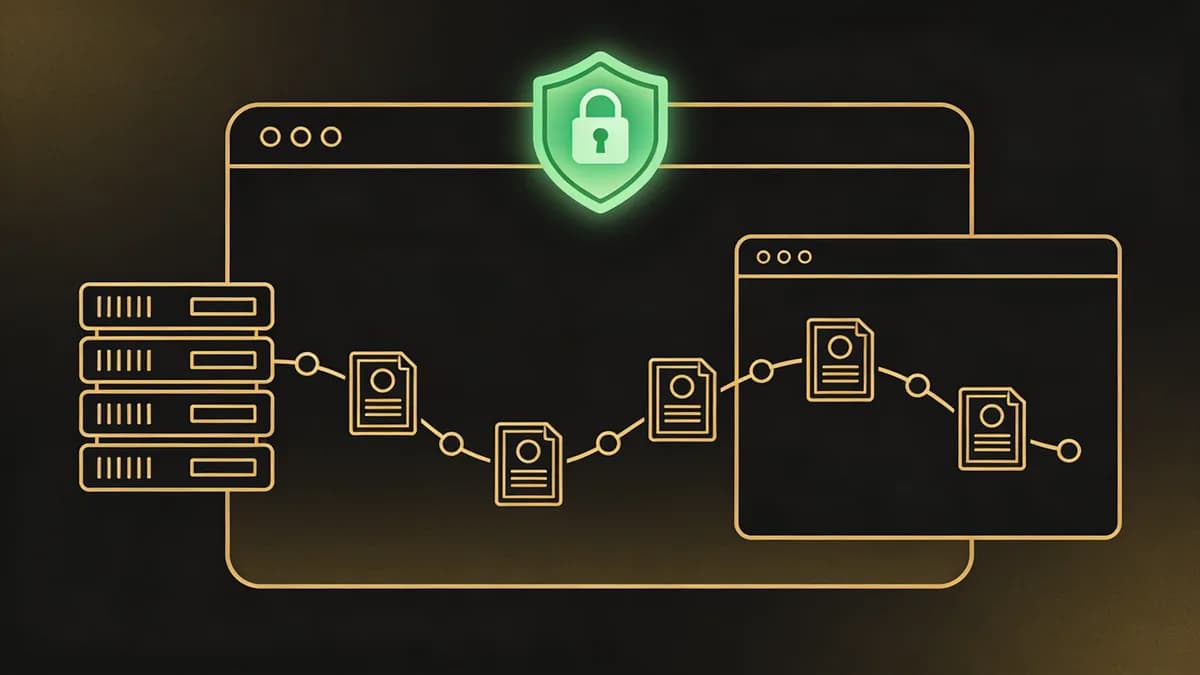
Enterprise SSL monitoring tools check certificate status, chain integrity, and expiration dates, and alert the team before the expiry date. Automated alerts, often integrated with incident management systems, notify SRE or DevOps teams so they can renew or replace a certificate before services are impacted. Alerting mechanisms via Slack, PagerDuty, email, and SMS can notify an on-call team. Monitoring covers both public-facing and internal certificates. Validation includes the entire certificate chain, not just the leaf certificate. Integration with CMDBs and inventory systems tracks the certificates in the inventory.
What are the Benefits of a Dedicated SSL Monitoring Solution vs. General Uptime Monitoring?
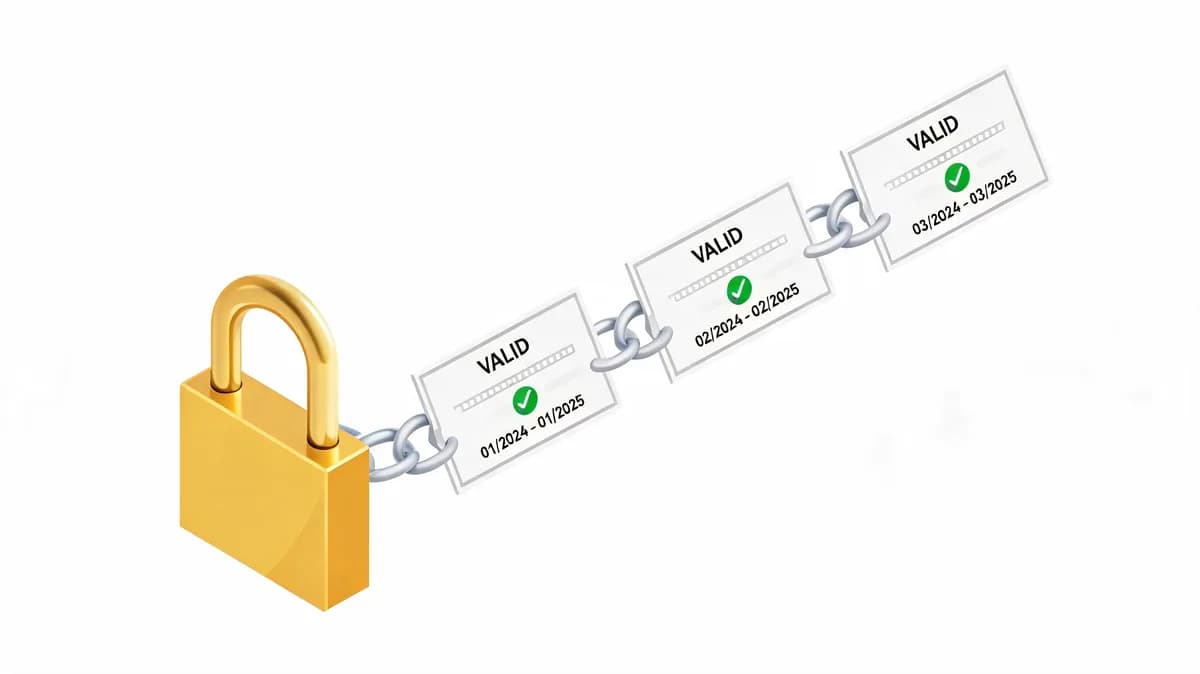
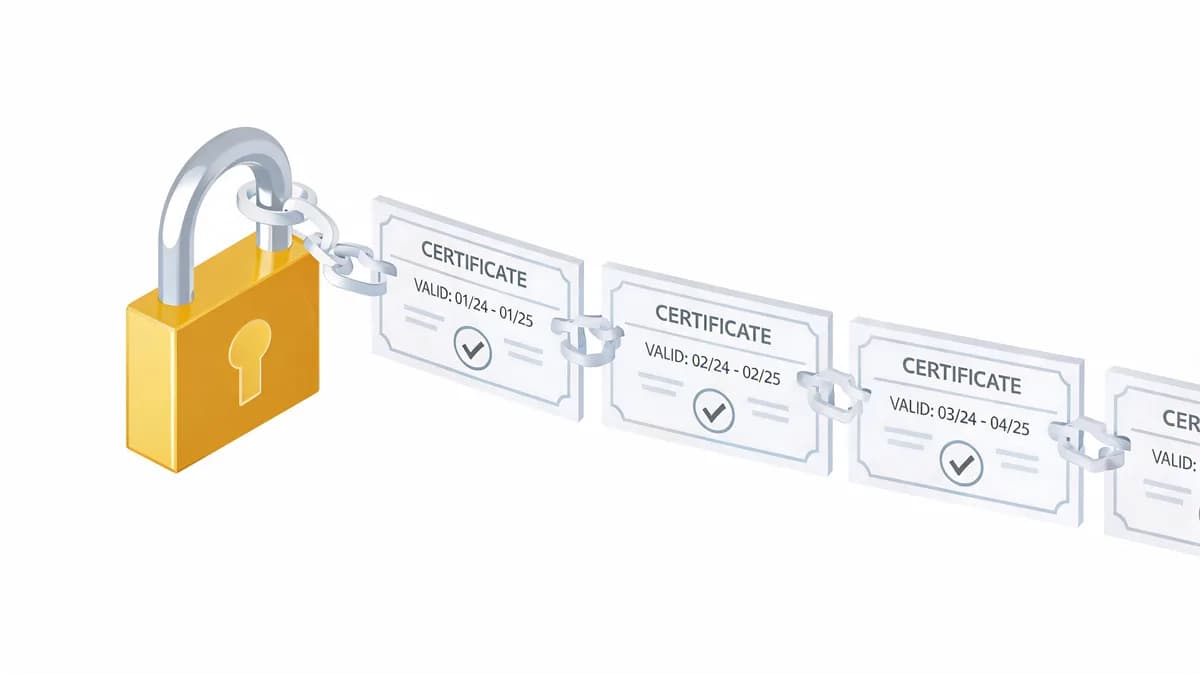
Dedicated SSL monitoring goes beyond basic expiry checks. Visual Sentinel tracks the trust chain, hostname, issuer and fingerprint changes as well as expiry. These checks help teams review certificate problems. Certificate checks can inspect the chain, issuer and expiry. The available validation and alert settings depend on the tool. They offer better reporting and forensics for SSL-related incidents. A chain check can flag an intermediate certificate that a leaf-only check would miss.
For SSL monitoring beyond a basic uptime check, Visual Sentinel validates the certificate with each uptime check. The Business plan is $80/month for 60 monitors, with uptime checks as often as every minute. New users can see a site's first check with no card, then start a 7-day trial (card required) from the signup page.
Ready to try it on the site you run? Start with checks for your own site and the alerts they send.
Check your SSL certificate now
Verify the certificate, expiry date, issuer, and hostname coverage. No account is required.
Check SSL freeCommon questions
Why is Enterprise SSL Certificate Monitoring Crucial for Business Continuity?
Enterprise SSL certificate monitoring watches for expired or misconfigured certificates before they take a service offline. An expired certificate can take a site offline for customers, which is why expiry is worth watching continuously.
What Enterprise-Level Features Should an SSL Certificate Monitoring Tool Offer?
An enterprise SSL monitoring tool should offer scalability for unlimited monitors, customizable alert channels (e.g., Slack, PagerDuty), granular control over check intervals (e.g., 10-second), and robust API integration for existing systems. Support for various protocols like TLS 1.3 and detailed certificate attribute checks are also essential.
How Does Visual Sentinel's SSL Monitoring Compare to Competitors for Enterprise Needs?
Visual Sentinel validates the certificate with each uptime check: every 5 minutes on Solo and Starter, and every minute on Business and Agency. SSL checks cover validity, chain, and expiry.
What are the Key Features and Pricing of Visual Sentinel's SSL Monitoring?
Visual Sentinel's Agency plan covers 300 monitors, with uptime checks as often as every minute. Alerts go out by email, Slack, Discord, Microsoft Teams, Telegram, PagerDuty, Opsgenie, webhooks, WhatsApp, Prometheus, and mobile push. SSL expiry reminders default to 13, 3, and 1 days before expiry. Users can also leverage the SSL Checker tool.
How Does Pingdom's SSL Monitoring Address Enterprise Requirements?
Pingdom, part of SolarWinds, offers SSL expiry monitoring as part of its uptime checks, with a quantity-based plan calculator that scales up to 30,000 uptime checks. While it covers basic SSL expiry, its focus is broader uptime rather than deep SSL chain validation. Its API enforces short-window and long-window rate limits, potentially limiting extensive automation for large enterprises.
What are UptimeRobot's SSL Monitoring Capabilities for Businesses?
UptimeRobot provides SSL expiry monitoring on paid plans, with Solo offering 10 monitors at 60-second intervals and Team offering 100 monitors at 30-second intervals. While it's a cost-effective solution for small to medium businesses, its basic SSL checks and limited API rates (monitor limit x 2 requests per minute, so 20 on a 10-monitor Solo plan) might not meet the comprehensive and high-frequency demands of large enterprises. Its free tier lacks dedicated SSL monitoring.